 


|
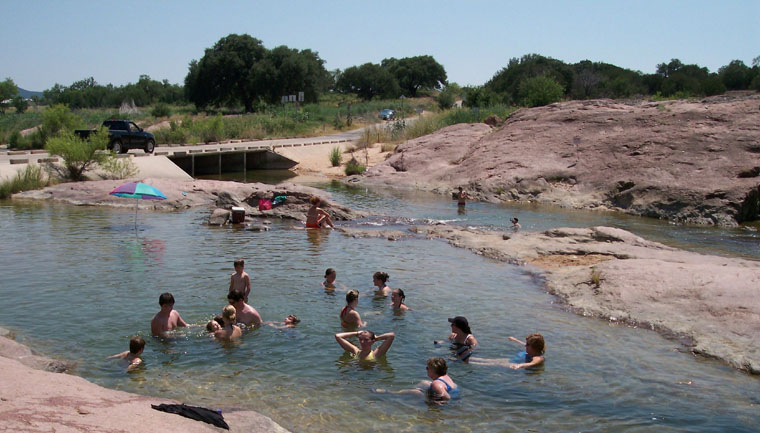
The Llano River is one of Texas' few remaining wild rivers.
Spring-fed, the spectacular Llano flows eastward from West Texas through rural and ranch
country before it empties into Lake LBJ on the Colorado River. The terrain is rocky
(some of the rock outcroppings are more than one billion years old--the oldest exposed
rock on the North American continent), mesquite and cactus-covered hill country.
More than 100 miles from a major city the sparkling water and clean, dry air make for an
incredible angling experience with an unexpected bonus of startling nighttime stargazing.
|
| |
|
Castell Cottage
19702 West RR 152<
Castell, Texas(325) 248-4270
(325) 247-3288
marci@castellcottage.com

|

|
The Lodges of Llano County
Featuring a complete listing
of Llano County B&Bs, Cabins & Cottages,
Motels & Hotels, Hill Country Ranches &
Vacation Rentals
on the Llano River, Lake
Buchanan, Inks Lake & Lake LBJ. Check
out our listings and spend your next vacation with us! |
 |
The Llano River rolls over solid rock
(granite and limestone) with occasional sand and gravel bars. Its forgiving
river bottom combined with clear water makes for reasonably easy wading. Wet wading
is comfortable from about April until the first freeze in October or November, then you'll
need to strap on the waders. The Llano is a perfect river for fishing from a
canoe--and a kayak is even better. Occasional rapids make paddling interesting and
there is enough quiet, deep water to hold the plentiful perch and bass.

 |
The crystal-clear waters of the Llano River are
home to graceful (read trout-like) native Guadalupe bass that share the river with spotted
bass, largemouth bass, catfish, sunfish, gar, carp, and dozens of other species |
 |
Although fish can be caught all year long --
certainly there are many sunny, glorious days in the dead of winter -- the fish are more
active in warmer water (March through November). However, we catch the
biggest largemouth bass in early Spring while the water is still chilly. |
 |
Fishing is allowed all year long. I
recommend and practice catch and release, but if you intend to keep your fish there is a
limit of 5 bass per day (in any combination of largemouth, spotted or Guadalupe bass) with
a minimum length of 14" for largemouth and 12" for Guadalupe and spotted
bass. There is no limit on panfish. Don't forget your license! |
Visit the Llano River Website for more information
|
Back
to Water Main Page
|
 

|